
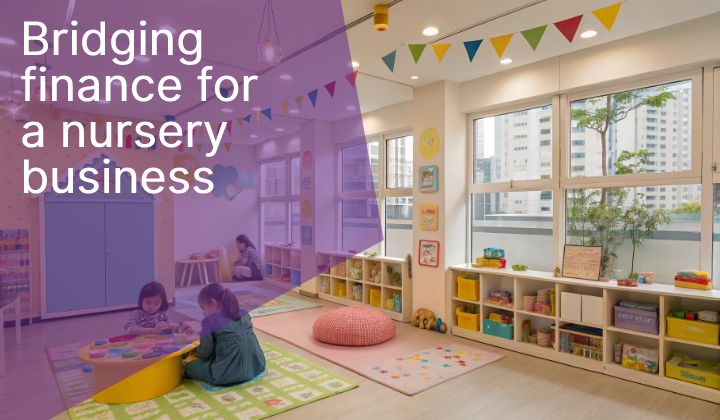
Opening a nursery or expanding an existing childcare facility can be a particularly sound investment, especially due to growing calls for better quality early years education across the UK. However, launching a nursery does come with a large amount of outlay required; from purchasing or renovating premises to meeting regulatory body satisfaction. For many business owners, a commercial bridging loan offers a fast, flexible way to fund these projects when traditional finance isn’t available.
Why demand for nurseries is increasing
More parents than ever rely on childcare to create a balance to their work and home lives. Government support through funded childcare hours and rising participation in early years teaching has resulted in a strong, sustained demand for nursery places to be available and more accessible for all.
This opens up many possibilities for business owners, investors, and existing nursery owners to open up new ventures in this space, or upgrade their current nursery facilities. But with high property prices and compliance costs, access to finance is sometimes limited and as such can stunt your growth.
The challenge of getting the finance in place
Conventional funding vehicles tend to see new or expanding nurseries as higher-risk ventures, particularly if the business does not yet have a long trading history. Securing a bank loan or commercial mortgage can take months and involve extensive paperwork, making it unsuitable for fast-moving individuals who need to act decisively and promptly.
At the other end of the scale, a commercial bridging loan provides short-term capital that can be accessed quickly, helping you complete purchases, any fix up or structural improvements without delay.
What is a commercial bridging loan?
A commercial bridging loan is a short-term funding option used to “bridge” the gap between buying or developing a property and securing long-term finance. It’s typically secured against the property itself and can be used for periods of times from a few months, all the way up to around 18 months.
For nursery owners and investors, this type of loan tends to be common when used to:
- Purchase a building for conversion into a nursery
- Fund renovation or expansion of existing facilities
- Manage cash flow while awaiting long-term funding or council help
- Cover licensing, planning, or compliance costs during setup
Once the business is operational with a healthy cash income, the bridging loan can be refinanced into a longer-term commercial mortgage.
How bridging finance supports nursery projects
1. Buying a property quickly
Good sites are often snapped up fast, especially those near schools, transport links, and family housing areas. A bridging loan enables you to pounce quickly, avoiding the long drawn out and mundane timelines associated with bank approvals.
2. Funding conversions and refurbishments
Many nurseries operate in converted houses, office blocks, or even within local community spaces. Bridging finance can cover the cost of making the property suitable for use like implementing child-safe layouts, outdoor play areas, and compliance with Ofsted and health-and-safety standards.
3. Expanding existing nurseries
If your current nursery is oversubscribed, a bridging loan can help fund additional rooms, expand into new locations, or put in place improved amenities so you can continue running operations at your main site.
4. Covering cash flow during transition
If you have decided on relocating, there may be a period of overlap before revenue stabilises. Bridging finance provides working capital at this stage so you can ensure the day to day isn’t impacted in a negative trajectory.
Benefits it brings for nursery businesses
Speed
Often the finance will be arranged in quick time, allowing you to act decisively and set things in motion.
Flexibility
Lenders specialising in short-term business finance can tailor solutions that best fit your objective, whether you’re buying, refurbishing, or expanding.
Short-term commitment
Most loans run from 6 to 18 months, giving you time to complete renovations, secure any needed certification and prepare the buildings ready for public business before refinancing.
No early repayment penalties
Many bridging loans allow you to repay early without extra costs once long-term finance or sufficient income is in place.
Supports property value growth
By funding upgrades and improvements, bridging loans can help increase the property’s market value, creating stronger equity for refinancing.
What to think of before applying
Although bridging loans provide speed and flexibility, it’s important you use them as strategically as possible for your needs. A consideration needs to be made towards your refinancing, business profits, or sale – what is the expected option you will consider to make up the funds to repay what you have borrowed.
Other considerations to keep in mind:
- Costs and interest: Rates are higher than standard commercial lending, down to these being a more short-term style of finance.
- Loan-to-value (LTV): Typically around 70–75%, depending on the property and borrower profile.
- Timescale: Be realistic about planning permission, regulatory inspections, and setup times before opening.
- Experience: Previous business or property experience helps demonstrate credibility to lenders.
Compliance and regulatory costs
Nurseries must meet strict passing checks, which can be expensive yet are legally needed before you will be granted any approval. These may include:
- Ofsted registration fees
- Building and planning permissions
- Fire safety systems and health inspections
- Accessibility and safeguarding compliance
- Staff training and early years qualifications
Factoring these into your bridging finance ensures you can tick all the boxes off properly without any funding shortfall.

Example: Converting a community building into a nursery
Let’s go with the vision of purchasing an old community hall within the local community. Such a building would make an optimal site that is ideal for a new nursery but it needs full refurbishment, including partitions, play zones, and outdoor areas.
Going for a loan with your bank would very likely delay things, or they may even refuse to consider any funding until the property is fit for purpose. A commercial bridging loan allows the investor to buy immediately and carry out the work. Once the nursery is operational and licensed, the loan can be refinanced into a long-term commercial mortgage at a lower rate.
Utilising a ‘bridge-to-trade’
Many nursery owners use a “bridge-to-trade” approach; securing short-term finance to purchase or refurbish, then refinancing once the business opens and begins generating income.
Working in such a way eliminates delays, allows a quicker route to getting the doors open, and helps entrepreneurs scale their vision much quicker. Once the nursery is trading successfully, the improved valuation and cash flow provide more favourable long-term funding options.
Working with a specialist lender
Nursery projects are not free of obstacles; from strict health and security audits, all the while with long planning and registration timelines. Working with a lender experienced in property and business development cases would give you the upper hand.
Goldhill Finance specialises in short-term business loans and commercial bridge financing tailored to projects like nurseries, schools, and other community-focused ventures. With flexible terms we can formulate a plan to meet your funding which keeps pace with the track you have set out.
Taking the opportunity for growth
Starting a new or expanding a nursery could turn out to be a very profitable decision, if done with the right attention to timing and with a strong financial planning. A commercial bridging loan provides the capital and flexibility to get your project moving , whether you’re converting, expanding, or launching a new site.
If you’re looking to open or grow a nursery business, contact Goldhill Finance today to discuss how our short-term business loans and bridging finance would help you take that journey.