
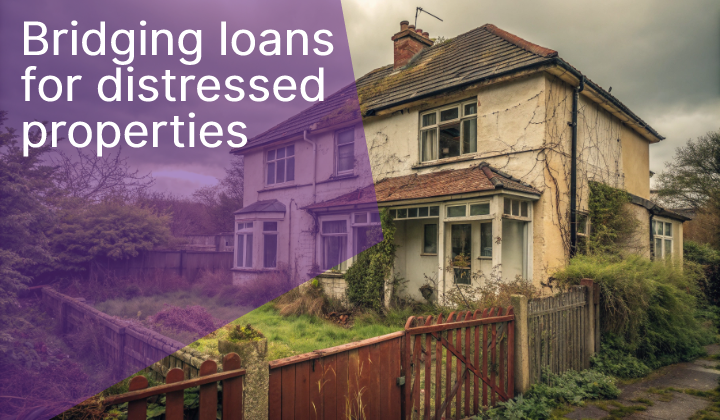
Distressed properties are nearly everywhere to be found at this time. The crazy rollercoaster of the economy, banks being more and more selective and sellers who just want to get rid of their house asap create the situation where there are some real bargains out there – but only if you can act quickly and have the right kind of money with you. Normal mortgages? No way. Most of these places cannot be mortgaged until someone has done some work, sorted the paperwork or the seller has calmed down. That is the place where bridging loans are coming. These are fast, they are adjustable and they allow you to seize the opportunities that nobody else can. Here is the simplified version of their working in the actual world.
What even counts as a “distressed” property?
Not necessarily a total disaster with a roof collapsing. Most of the time it is the seller that is in distress and not the building. Examples of such situations would be:
- Somebody who needs a super-quick sale (divorce, repossession, probate, you name it)
- Houses being sold at ridiculous prices due to owner’s impending repayment
- Houses without a kitchen or bathroom, or half-finished conversions
- Properties up for auction where you have 28 days to complete
- Properties with illegal titles or missing documents
- Landlords selling off their entire portfolio due to tax changes or cash-flow problems
The positive side of it? You are buying at low prices, there is usually a nice increase after the property is fixed, and the rental yields or resale profits can be great.
Why normal mortgages are useless for these deals
Standard banks require perfection in everything: the borrower, the property, the documents, even the phase of the moon… Distressed properties fail at least one of these every time. No bathroom? Structural cracks? 45-year lease? Fire damage? Good luck getting a mortgage offer before Christmas. Even if the property itself is perfect, the seller is usually required to complete the transaction in a matter of weeks, not months. Mortgage applications move at a snail’s pace – you will be gazumped while waiting for the valuation. Bridging simply examines the asset and says “yes, we will provide the money”. Work is done.
How bridging actually helps you in the trenches
Bridging loans are designed for quickness and unusual circumstances. You get:
- Money within a few days, not months
- The power to purchase almost any property (even the ones without a kitchen)
- Interest can be rolled up or paid monthly – whatever suits
- If you want, you can get the money to do the refurbishment as well
- The opportunity to be the first to the market
Speed – the absolute game-changer
Most of the time the seller only wants certainty and a fast completion. Bridge over with a loan and say “we can do it next week” and you have pretty much won the deal before the others have even started filling in forms. It is perfect for auctions, off-market deals, or when a chain has collapsed and someone is desperate.

Buying the proper rough stuff
Bridging lenders do not care whether the house has a kitchen, a leaking roof, or needs to be completely rewired. They will still lend on it. You take it, fix it up, and then either sell it or get a normal mortgage once it is clean and tidy.
Paying for the refurb along the way
Many bridging loans allow you to take extra money as the works progress – new boiler, full rewire, extension, whatever. You pay interest only on what you have used, and the whole thing gets paid off when you sell or remortgage.
Auctions? Piece of cake
You can place bids with real certainty as you are aware that the money will be available on day 28. Most of the other bidders present in the room are hoping that their mortgage will be approved or are trying to gather cash from a relative. At this moment, you simply smile.
Chain breaks and panicked sellers
Buyer of someone’s property has dropped out two weeks before exchange? That’s your opportunity. Bridging enables you to take over, finish the deal in a few days, and usually lower the price a bit more because you are solving their nightmare.
Grabbing whole portfolios
Landlords are constantly unloading multiple properties these days – BTL changes, Section 24 tax pain, or they might just want to cash out. A bridging lender can provide funds for all of them at once, you stabilise or spruce them up, then you can refinance each one (or the whole lot) with long-term finance later.
The risks – don’t be daft
Yes, the gains can be huge, but it is not free money. Be cautious of:
- Refurb costs going out of control (always double your budget, seriously)
- Hidden villains in the legals or structure
- It taking longer than expected and therefore extra interest accumulating
- The market dropping while you are caught off guard in the middle of a refurb
Bottom line
In case you are really determined to pick up distressed properties in the UK at the moment, bridging finance is almost the only instrument that allows you to be fast enough and buy the properties that no one else can. Make sure your numbers are right, have a solid exit plan (sell or refinance), and it is one of the cleverest ways of making quite a bit of money from property when others are just waiting for the perfect house and a 25-year mortgage.