If you are a homeowner in the UK you will know that living costs are rising and higher interest rates are making managing existing debt much more challenging than it ever has been. If you currently own a property, you may be wondering if the equity in your home could be used as a practical way to consolidate or repay any outstanding balances.
The short answer to this is yes, and there are several options available to you, this will always depend on your circumstances and the goals you have in mind.
In this blog post we explore how home equity works, how it can be accessed responsibly, and how a bridging loan could be used to unlock any value currently tied up in your property.
What is home equity?
Home equity is the difference between your property’s current market value and the amount you still owe on your mortgage (alongside any other secured lending). As an example, if your home is worth £400,000 and the balance on your mortgage is £250,000, you will have £150,000 in equity.
This equity is not cash that can be found in your bank, but, it represents value that can potentially be accessed through very specific types of finance.
Why would you use equity to pay off debt?
Using property equity to repay debt can be beneficial when it is being done for the right reasons. Many homeowners choose to go down this route to:
- Simplify multiple debts into one structured repayment
- Replace higher-interest unsecured borrowing with lower-interest secured finance
- Improve your monthly cash flow
- Create financial breathing space during a period of transition
Some common debts that people look to clear include credit cards, personal loans, tax liabilities, or any business-related borrowing.
Borrowing against your home means the debt becomes secured, this means that careful planning and professional advice is absolutely essential.
Ways to access equity in your home
If you are looking release equity, there are several ways that UK homeowners can do this, including:
- Remortgaging: This means you switch to a new mortgage, this often comes with a higher loan amount
- Further advance: Borrowing additional funds from your existing lender
- Second charge mortgage: This is a separate loan which is secured against your property
- Bridging finance: A short-term loan that has been designed to offer flexibility and speed
Each of these options suit a completely different situation and only one of them may be right for you. Remortgaging, for example, may work well for those who have a longer-term plan, while bridging finance is often used when time is critical.
What is an equity bridge loan?
One common question homeowners ask when they learn you can use a bridging loan for equity is: What is an equity bridge loan?
An equity bridge loan is a type of short-term bridging finance that allows you to borrow against the equity in your property. It is typically used for periods ranging from a few months up to 12 months, 24 months is available with a payment plan in place. This bridge loan is secured against residential or semi-commercial property.
This type of loan can be particularly useful if you need funds quickly or if the route of a traditional mortgage is not suitable, such as:
- You need to clear debt before you refinance
- You need to manage cash flow while you sell a property
- Resolving short-term financial obligations
- If you are supporting a business or investment transition
As bridging loans focus more on the value of the property and the exit strategy you have in place, instead of just personal income, they are much more flexible than mainstream lending.

How you can get a bridging loan using the equity available on your property
If you are looking to obtain a bridging loan using the equity in your property, a lender will assess:
- The current value of your property
- Existing mortgage or secured borrowing
- The total loan-to-value (LTV), typically up to 65–75%
- The exit strategy you have proposed (such as remortgaging or selling)
The equity in your home will effectively provide security for the loan. Once your loan has been approved, the funds you need can be released much faster than with traditional mortgages, often within 48 hours.
The interest on a bridging loan is usually rolled up, meaning you may not need to make monthly repayments during the loan; this will however depend on the structure of the bridge loan you have agreed.
Using a bridging loan calculator
Before you proceed, we know that you may find it helpful to use a bridging loan for equity calculator. By using this calculator you can estimate:
- How much you are able to borrow
- The impact of interest over the loan term
- Associated costs such as arrangement and valuation fees
Although a calculator can be a useful guide for your loan, a specialist broker can offer a more accurate assessment that is tailored to your property and objectives.
Important considerations
Are you looking to use equity to pay off a debt or debts? If the answer is yes, we recommend that you always do this as part of a wider financial plan. If you’re looking to go down this route, ask yourself the following questions:
- Does the loan term align with the way you intend to exit?
- What is the total cost that you want to borrow?
- Have you sought advice from a regulated professional or professionals?
- Does the solution you choose support long-term financial stability?
As long as your finance is structured correctly, accessing equity can be a strategic way to regain control and move forward with confidence.
Final thoughts
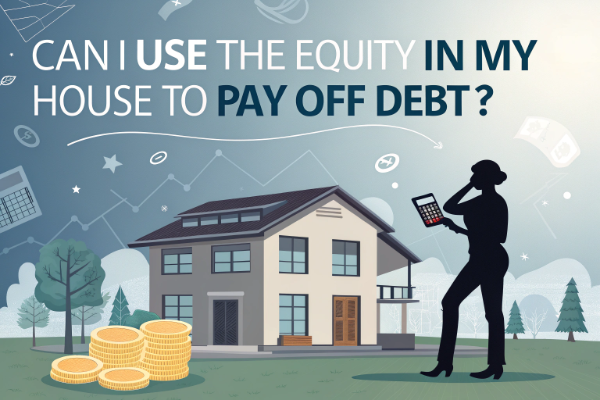
To answer the original question, can you use the equity in your house to pay off debt? For many UK homeowners, the answer is yes.
Bridging finance, in particular, offers a flexible and efficient way for you to access equity for short-term needs, this is as long as there is a clear and realistic exit plan in place.