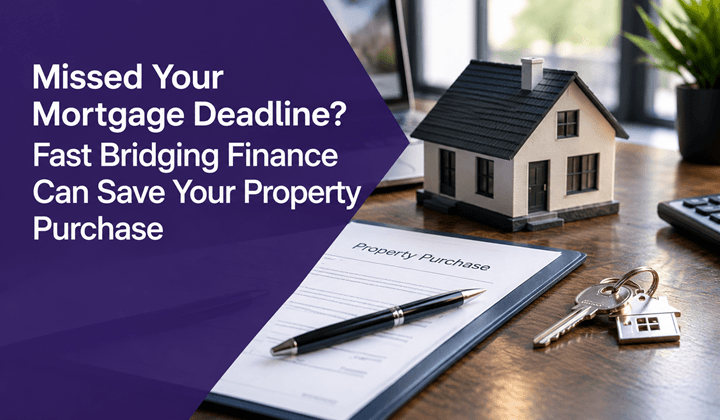
Removal van booked. Boxes packed. Then, three days before completion, your solicitor calls: the buyer at the bottom of your chain has pulled out, and your mortgage offer will expire before a new buyer could realistically be found. If that phone call sounds familiar, you already know how quickly a property purchase can turn from settled to uncertain. What you may not know is that a lapsed mortgage offer does not have to mean a lost property, provided you move quickly enough to bridge the gap.
Why mortgage deadlines slip
Most mortgage offers are valid for three to six months, which sounds generous until a chain involves four or five separate sales that all need to complete on the same day. A delayed survey, a solicitor further along the chain working slowly, a buyer’s own mortgage application falling through, or a valuation coming in lower than expected and causing renegotiation elsewhere in the chain, is enough to push everyone past their deadline. None of this reflects anything you have done wrong. It is simply how a chain works: your completion date depends on decisions made by people you have never met.
What happens once the offer lapses
Once a mortgage offer expires, most lenders require a fresh application rather than a simple extension, particularly if your circumstances, the valuation, or interest rates have moved on since the original offer. A fresh application can take four to six weeks, longer still if a new valuation is needed. During that time, the seller is within their rights to accept another offer, and anyone relying on your purchase further down the chain is left waiting too. Any deposit or costs already paid towards the transaction are also at risk if it collapses entirely.
How fast bridging loans buy back the time you need
This is the exact gap that fast bridging loans are built to fill. Rather than restarting a mortgage application from scratch, a bridging loan is arranged against the property to fund the purchase now, with the loan repaid once your mortgage offer is reissued, a sale further down your chain completes, or another agreed source of funds comes through. Because the lending decision is based on the property and your exit plan rather than a full mortgage underwriting process, it can be arranged in a fraction of the time a fresh mortgage application would take.
Inside the pay-out process
Speed is the entire point of bridging finance, so it helps to know where that speed actually comes from. A mortgage moves through several stages one after another: income checks, then valuation, then legal work, then offer, then completion. A bridging application runs most of these stages at the same time. A typical residential case looks something like this:
- Day 1: application submitted and a decision in principle issued, often within hours.
- Day 1 to 3: valuation instructed, with straightforward cases using a desktop or drive-by valuation rather than a full physical inspection.
- Day 2 to 5: solicitors on both sides begin title and legal checks in parallel, rather than waiting for each other.
- Day 5 to 10: valuation and legal work complete, and funds are released.
More complex security, such as a short lease or an unusual title history, typically extends this to two or three weeks, still well inside the six to eight weeks a standard mortgage can take from a standing start.
What this speed costs you
It is worth being honest about the trade-off: bridging finance carries a higher interest rate than a standard mortgage, because it is priced for speed and short-term risk rather than a twenty-five-year term. For most buyers facing a genuine deadline, a few weeks or months of higher interest is a reasonable cost against losing a property, a deposit, or a chain that took months to build. It only becomes an unreasonable cost if there is no realistic exit route in sight, which is exactly why a lender will want to see one before releasing funds.
Is a personal bridging loan the right route for you?
Bridging finance is also used by property developers and businesses, so it is worth being clear about where you fit. If you are buying a home to live in and need funds released quickly because a chain has broken or an offer has lapsed, what you want is a personal bridging loan: finance secured against a property you already own, or against the one you are buying, assessed mainly on equity and your exit strategy rather than payslips and affordability calculations. That distinction is exactly why the process can move so much faster than a mortgage application built around your income.
What you will need ready
- Proof of identity and address, the same documents a mortgage lender would ask for.
- Details of the property being purchased, including the agreed price and any existing survey.
- A clear exit strategy, such as a reissued mortgage offer, a sale further down your chain, or funds due from elsewhere.
- A solicitor who has handled bridging transactions before, since this alone can save several days.
Act before the deadline, not after
A missed mortgage deadline feels like the purchase is over, but in most cases it only means the original route to completion no longer works. Contact a bridging lender as soon as a chain looks at risk, rather than waiting for the offer to actually expire, since the days saved at the start of the process are often the ones that matter most by the end.