 Skip to content

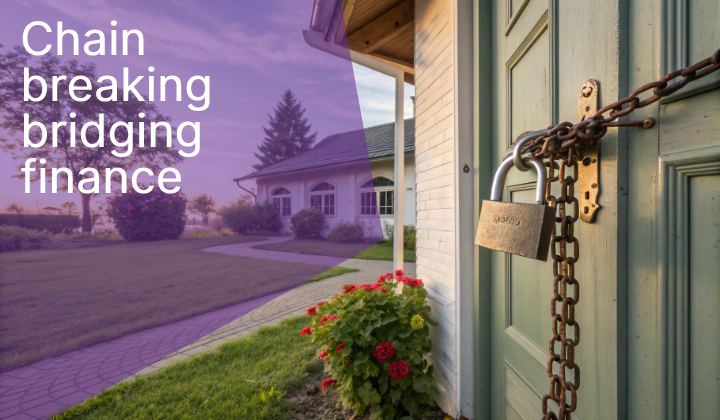
Property chains are the most terrible things, aren’t they? One person gets cold feet, a survey report finds some damp, a buyer’s mortgage gets declined… and the whole thing falls down like a deck of cards. You have no buyer for your place, the house you wanted gets taken by someone else, and you are back to square one – stressed out, out of pocket, and probably having to cancel the removal van.
That is where “chain-breaker” bridging loans have become complete rescues. An increasing number of regular homeowners are turning to them to give the answer “oh well, I’m buying the new house anyway” even if their own sale has gone pear-shaped. Here is the straightforward version of how they function and the reason why they are there in such a large number.
Reasons for the break down of chains (something is always involved)
It is hardly ever your fault. The most common culprits are:
- Your buyer loses their mortgage offer at the last minute
- The survey reveals something scary (or they use it as an excuse to chip)
- Somebody further down the chain changes their mind
- Searches take forever
- Someone gets gazumped or just gets jittery
One weak link and the whole thing collapses like a game of Jenga.
Chain breaking bridging loan – what actually is it?
It is temporary borrowing that gives you the power to purchase your new home without the necessity of the sale of your old one. Instead of waiting for the money from your buyer, you take a loan just enough to finish the purchase, move in, and then sell your old place properly when the dust settles – without the gun to your head.
For a short period, you are the owner of two properties, but you keep your house that you love and you are not forced to take a low-ball offer just to keep things going.
What makes these loans so popular nowadays
The last few years have been disastrous for chains:
- Banks are continually tightening affordability rules
- Valuations are getting lower
- Buyers are pulling out at the last moment as they wait for rates to drop
- Conveyancing is slower than ever
Furthermore, if you are purchasing a new build with a tight deadline or relocating for a job, you cannot wait for six months hoping that your buyer will sort himself out.
A bridge loan simply provides you with certainty.
How it actually rescues your onward purchase
Imagine this: your buyer is going to pull out two weeks before exchange. Without a bridge, you are going to lose the new house, the money for the survey and legal work that you have already paid is going to be wasted, and you are going to have to start the whole miserable process all over again.
With a chain-breaker loan you simply move forward:
- You acquire the new house and move in
- You put your old place back on the market at the right price – no fire-sale nonsense
- You sell it quietly over the next few months and clear the bridge
You remain in control, you do not look desperate, and you do not lose thousands by accepting a dodgy offer.
When people are usually in need of one
- Buyer pulls out at the last minute (classic)
- Your buyer’s mortgage falls through
- Survey causes a stand-off in the renegotiation
- You have a new-build completion date set in stone
- Your sale and purchase dates don’t match up
- You simply cannot face starting the search again
How lenders view these loans
They are a little bit more lenient than investor bridging deals as you are not a landlord – you are just a normal person moving house.
They mostly worry about:
- How much equity do you have in your current house
- That both properties are worth what the estate agents say
- That you have a believable plan to sell the old place fairly quickly
They are not questioning you about long-term affordability as it is only a short-term loan.

How you get out of this (the exit)
In 99% of cases, it is simply: Sell the old house → repay the bridge → done.
If the sale drags on a bit, you may just remortgage the new place to a normal deal once you are settled. Very seldom someone sells the new one instead, but that is not very common.
Most of the time, people have the bridge for 3-9 months, often less.
The risks – let’s be honest
It is not free money:
- Interest is not cheap (however, it is normally rolled up, so you do not pay it monthly)
- In case your old house takes a long time to sell, you will be paying interest for a longer period
- You are technically a bit stretched with two properties for some time
But put that side by side with the losing of the perfect house, paying for another round of surveys, and starting all over again? The majority of people say that it is worth every penny.
The best thing: you get your life back
Honestly, the biggest win is the control:
- The time of your buying is when YOU ARE ready, not when the chain dictates
- You sell your old place properly – no lowering the price by £30k just to get rid of it
- You are not living out of boxes anymore, waiting for someone else’s buyer
- You remove the emotion from it and make logical decisions
Moving house is already a mess of a job, without the whole thing depending on the mortgage approval of a stranger.
Bottom line
Chain-breaker bridging loans have changed from “a bit niche” to “an absolute godsend” during the last couple of years. In case your chain falls apart and you have already found the house that you really want, they allow you to hold on to it, move when you planned, and sell your old place on your terms.
Yes, it costs a bit. Yes, you need decent equity and a realistic plan. But for a great number of people, it’s the difference between getting the family home they wanted and having to settle for second best.