 Skip to content

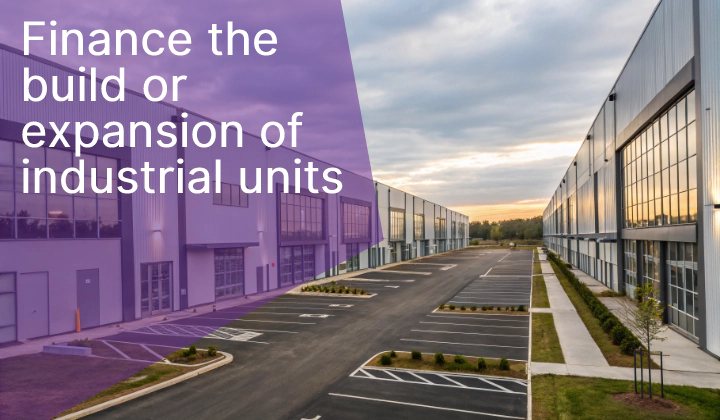
Industrial units, such as warehouses, workshops, and distribution centres, play a vital role in the UK economy. They’re also represent a great chance of profitability for business owners and property developers looking to capitalise on rising demand for flexible commercial spaces. Whether you’re planning to purchase a new site, refurbish an existing unit, or further your current operation, a commercial bridging facility can give the speed and convenience that more conventional finance often lacks.
Why industrial units are in demand
With the growth of e-commerce, logistics, and light manufacturing, demand for industrial property has soared recently. Businesses are looking for well-located spaces with modern amenities, excellent transport links, and energy-efficient infrastructure. The strong rental projection and long-term stability these assets offer also attract investors.
However, acquiring or redeveloping an industrial site is not without substantial cost and tight timeframes; particularly when opportunities arise at auction or through off-market deals. This is why bridging finance is good to have on your side.
What is a commercial bridging loan?
A commercial bridging loan is a short-term funding solution designed to bridge the gap between buying a property and securing long-term finance. It’s typically used for periods between 3 and 18 months and is secured against the property or another asset.
For industrial units, a bridging loan facility can help you:
- Purchase or refinance industrial premises quickly
- Fund refurbishment or expansion work
- Acquire sites at auction or from administrators
- Better keep track of your balances between relocation or redevelopment
- Bridge to longer-term finance once the asset is income-producing
Bridging lenders often assess deals based on asset value and the strength of making a repayment, instead of rigid credit criteria, which makes the approval far more flexible than that of a traditional commercial mortgage.
Common industrial finance scenarios
1. Buying a warehouse at auction
Auction deadlines typically require completion within 28 days, leaving little time for conventional funding. You can get things rolling much faster with a commercial bridging loan and refinance after settling ownership and leases.
2. Refurbishing outdated industrial units
Older units may need major upgrades to attract tenants or to bring them up to expected acceptable state, such as energy-efficient lighting, insulation, or improved loading access. Bridging finance can fund these works before refinancing them with an enhanced valuation.
3. Expanding a growing business
If your company has outgrown its current space, a bridging loan can help you purchase a larger unit while selling or leasing your existing premises. This avoids disruption and keeps operations running smoothly.
4. Redeveloping a site for mixed use
Some investors repurpose their sites to create hybrid spaces combining storage, offices, and workshops. Short-term finance can support construction and planning costs until the final structure is ready for a longer-term facility.
Advantages for industrial projects
Speed
Funds can be released in a matter of days, helping you act quickly on commercial opportunities.
Flexibility
Lenders operate in a different manner to the banks. Specialist lenders understand what development entails and are more understanding towards complex projects, multiple securities, or phased funding.
Short-term commitment
Loans taken out on a bridging facility are to cover shorter periods, meaning you only pay interest for as long as you need the funds.
No early repayment penalties
Many products allow you to repay early once your refinance or sale completes, without additional charges.
Value-add potential
By funding improvements, a bridging loan can help you increase the asset’s market price which can help you bring in extra cash before refinancing.
What to note before applying
Bridging finance is powerful if the planning is done adequately. Always be sure of the end goal, such as refinancing with a commercial mortgage or selling the property after redevelopment.
Other things you need to keep in mind:
- Costs or charges: Loan interest will be typically higher than long-term products as due to the short-term nature and speed of access.
- Loan-to-value (LTV): Most lenders offer up to 70–75% of the property’s value.
- Timescale: Set realistic targets for completion of the project and how long the refinance will need to be for.
- Experience: Lenders look favourably towards applicants with previous property or development experience.
Working with an experienced broker or lender who understands industrial properties can be extremely beneficial when trying to obtain favourable terms.
The bridge-to-let or bridge-to-commercial model
A strategy which some property investors use is taking out a bridging loan to purchase and refurbish a site, then refinance with a long-term commercial mortgage once the property is tenanted and rental incomes starts to be realised.
A “bridge-to-let” or “bridge-to-commercial” vehicle helps to raise capital efficiently, adding value before locking into a lower-rate product. This can aid you in moving into new premises faster while protecting your own cash balances.
Example: transforming a warehouse into modern workspace
A transportation company is purchasing an old 10,000-square-foot warehouse in need of refurbishment. The banks stated there would be a delay or refusal funding until the site meets lending criteria. A commercial bridging loan allows the company to make an immediate purchase, get the site up to standard, and refinance once the building is fully operational and has increased in value.
That short-term flexibility can be what makes an opportunity attainable, instead of missing out altogether.

Why choose a specialist lender
Industrial sites may require titles, mixed-use elements, or phased developments that mainstream lenders won’t be willing to fund. A specialist lender such as Goldhill Finance evaluates your case based on its commercial merits, not just standard metrics.
With direct access to decision-makers, Goldhill Finance can structure a facility around your project’s cash flow and plans to refinance, giving you the confidence to move ahead without any stalling.
From potential to progress
Industrial units and warehouses are core assets in today’s economy, and their value continues to grow. Whether you’re a business owner wanting to increase your productivity or an investor redeveloping commercial property, speed is one of the more essential components needed. A commercial bridging loan offers the perfect short-term solution to purchase, refurbish, or expand your industrial site, giving you the breathing room to complete works and secure long-term finance later.