If you’re looking to convert a run‑down property or carry out a structural overhaul on a building you own, there aren’t many types of finance that may be of help to you. However, at Goldhill Finance Limited we offer just the product that can help, a heavy refurbishment bridging loan. This type of finance is perfect for investors, developers or property professionals who are looking to carry out major renovation projects.
This specialised short‑term loan bridges the gap between the purchase (or existing equity) and the long‑term funding or sale of the property.
First of all, what is a heavy refurbishment bridging loan?
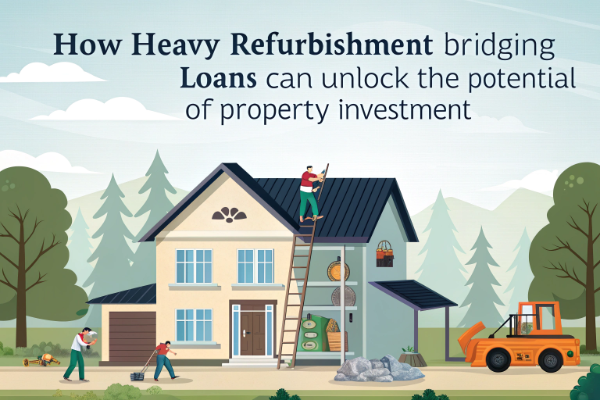
A heavy refurbishment bridging loan is used to fund significant works on a property, especially if any structural changes are needed, or if the cost of work that you need to be done exceeds a certain proportion of the property’s value.
Typical projects include:
- Loft conversions, extensions or underpinning
- Structural reconfigurations
- Conversions (e.g. single dwelling into multiple units)
- Commercial‑to‑residential conversions or large HMOs
These are some examples of projects in which the property would not be mortgageable in its existing condition. A standard mortgage lender would usually walk away from this kind of opportunity.

Why choose heavy refurbishment bridging finance?
Over our many years of experience we have found that there are three main reasons why an investor would turn to this type of finance:
1. Quick access to capital
Bridging finance is often arranged much faster than your traditional mortgage, funds can be made available in a matter of 48 hours and you can be accepted within 2. This is a big pull for those who are looking to purchase at auction or are dealing with a time‑sensitive project.
2. Flexibility around works
Most lenders will release the funds you need in stages once certain milestones are met, especially for heavy refurbishment where the work carried out is often quite complex. This staged drawdown approach means you are able to manage cashflow a lot better while still carrying on with your project, letting you concentrate more on the project than the money.
3. Unlocking value before long‑term finance
Once the work on the property has been complete and it is now seen as “mortgageable” you can then exit the bridging loan by refinancing onto a long‑term buy‑to‑let or commercial mortgage, or by selling the property/properties for a profit.
Understanding rates
As heavy refurbishment bridging loans carry more risk for lenders than light refurbishments or the standard bridging loan, heavy refurbishment bridging loan rates are typically higher.
They’re usually quoted on a monthly basis and can depend on factors such as:
- Loan‑to‑value (LTV)
- Your experience
- And the type of exit strategy that you have planned.
As of the latest market data:
- Competitive monthly rates can start from around 0.60% – 0.75% on lower LTVs, rising to around 0.85% or more at higher LTVs.
- Some lenders also offer products where valuation requirements can be reduced or desktop valuations are used, this often speeds up the completion.
Costs and fees to expect
Bridging loans come with a range of other fees along with the normal interest rates you get on most standard loans, these costs and fees should always be factored into any calculations you have:
- Arrangement fees: This is typically 1–2% of the loan amount.
- Valuation fees: This is based on the condition of the property and the complexity of your project.
- Legal fees: In most cases you will pay both your solicitor and the lender’s solicitor.
- Monitoring fees: For heavy refurbishment, lenders may require site inspections as funds are drawn down.
For any help on costs and fee’s, make sure to use our bridging loan calculator to give yourself a roundabout figure.
How to work out the numbers
Before you decide to commit to this type of bridging loan, we advise that you run the figures to see how the loan will impact your overall return. A heavy refurbishment bridging loan calculator can be an invaluable tool, it allows you to estimate interest costs, overall repayments and the amount you’ll need to refinance or sell for at the end of the term, making sure you don’t lose any money.
Just remember that any online tool is illustrative only, bridging finance is highly bespoke to your needs and requirements, rates and fees vary by the lender and the project you are undertaking.
So, is a heavy refurbishment bridging loan right for you?
If you’re planning a major construction project or any type of structural work that will significantly increase your property’s value, and you also have a solid exit strategy in place, a heavy refurbishment bridging loan is the perfect choice for you.
Not only does this loan give you the capital you need, it also provides you with the flexibility to transform properties that traditional lenders just won’t touch.