
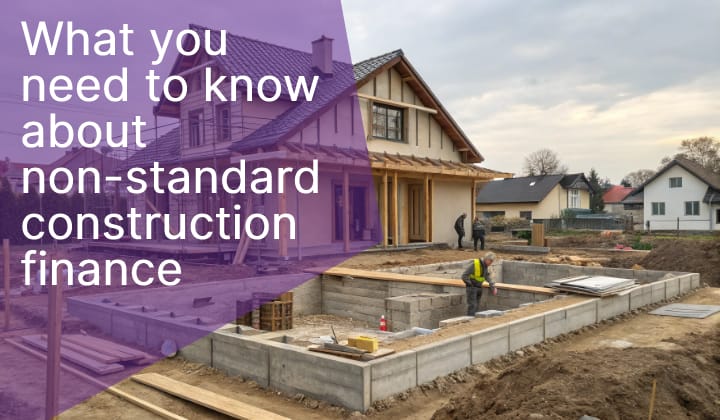
When it comes to securing finance, at Goldhill Finance Limited we understand that buying, renovating or developing a property which falls outside of the traditional construction methods can feel complex and difficult.
Non-standard construction properties present additional challenges for mainstream lenders, however, if you choose a specialist finance option, such as development finance, you can receive a practical, flexible solution.
In this blog post, we explain what non-standard construction finance is, which types of property are affected, and what you can are able to do in order to improve your chances of approval.
What is non-standard construction?
A property is typically known as a “non-standard construction” if the property is not built using traditional brick or stone walls with a tiled or slate roof. Unlike what most people are led to believe this does not mean the property is unsafe or poorly built, it instead just falls outside of a lenders usual comfort zone.
Some common examples include:
- Properties with a timber frame
- Prefabricated (prefab) homes
- Properties that are affected by mundic
- Grade II listed and period properties
Each of these examples comes with its own considerations when you apply for finance.
Timber frame properties
Although this kind of property is not something everybody has heard of, timber frame homes are far more common than many buyers realise. Particularly in Scotland and with newer UK developments. Modern timber frame properties are always built to strict building regulations despite what people may think they can be just as durable and energy-efficient as a “traditional home.”
Finance considerations:
- Modern timber frame homes (post-2000) are generally well accepted by mainstream lenders
- Older timber frame properties can require additional surveys
- The fire resistance of the home and any maintenance the property has had in its history can influence a lenders decision
How development finance can help
Development finance can support both the new-build and refurbishment of timber frame projects, this is done by funding construction costs in stages, aligned to the progress being made on site.
Our top tip: Always provide evidence of compliance with modern building standards, this can significantly help with your application.
Prefabricated (prefab) homes
Most prefab homes in the UK were built after World War II, this was done to address the housing shortage. Some types, such as Airey, Cornish or Unity houses, can be a lot more challenging to finance, especially if they haven’t been repaired under any of the current or past approved schemes.
Finance considerations:
- Some prefab properties are mortgageable, others are not
- Most lenders will want confirmation of approved repairs or certification
- The structural condition of the home is critical
How development finance can help:
Development finance can be used in any of the following ways:
- To acquire and refurbish prefab properties
- To fund an approved repair scheme
- Or to convert them into a mortgageable asset, by doing this you can unlock value that mainstream lenders may initially overlook.
Our top tip: If repairs have been carried out on the property, make sure that you keep all of the documentation, this can make a major difference when it comes to applying for development finance.
Mundic properties
This is one property type that not many people may have heard of, mundic refers to properties in parts of Cornwall and Devon in which concrete was made using mine waste. Over time, this can lead to structural deterioration.
Properties are typically classified following a mundic survey (Classes A1 to A3).
Finance considerations:
- Class A1 properties are acceptable to most lenders in most cases
- Class A2 or A3 properties are much harder to finance
- Specialist lenders may still consider some cases

How development finance can help
If you own a mundic property you’re not out of luck, specialist development finance can assist with:
- Acquisition
- Testing
- and remedial works
This enables borrowers to improve the property’s classification and create a viable exit through the sale or refinance of the property.
Tip: Always commission a mundic report early, it can save time and unexpected costs later.
Grade II listed and period properties
Grade II listed buildings and period homes are well known for their character and history, however, it’s important to note that they come with unique responsibilities.
Finance considerations:
- Lenders assess the condition, maintenance, and any alteration restrictions
- Any specialist materials that may be needed or construction methods can also affect the valuation
- Insurance and repair costs are also closely scrutinised
How development finance can help
Development finance, when provided by a specialist lender, can support sensitive refurbishments, restorations or conversions, we are also able to offer flexibility around the property type, how old the building is age and construction.
Our top tip: Always make sure you can demonstrate a clear plan for any on-going maintenance, this reassures both lenders and valuers.
Improve your chances of securing future finance
If you’re looking to buy or remortgage a non-standard construction property, being well prepared is vital:
- Use a broker who has experience in non-standard construction finance
- Expect more detailed surveys and valuations
- Make sure to have a strong deposit, where possible
- Keep all of your relevant documents organised (certificates, repair history reports, past surveys)
Specialist lenders, such as ourselves, exist precisely for this type of scenario, and the criteria for such developments has continued to evolve over recent years, opening up more options than many buyers expect.
Why is development finance the right solution?
Development finance offers several advantages when it comes to non-standard construction projects:
- The ability to fund the purchase, refurbishment or full redevelopment of a property
- Flexible criteria which is tailored to your complex property type
- Finance is released in stages aligned to the progression of the build
- Viable exit routes are available via the sale or refinance once the work has been complete
How a development finance calculator can help
Before committing to any form of project, it is essential to understand the numbers behind the development. A development finance calculator provides a useful early indication of your borrowing potential, the estimated costs and the structure of the funding.
When used correctly, a calculator can help borrowers:
- Work out an estimate of how much they are able to borrow
- Understand likely loan-to-cost or loan-to-GDV levels
- To make sense of whether a project is financially viable or not
- To prepare much more efficiently before you speak to a lender or broker
Although a calculator won’t replace a full assessment, it can be a very valuable planning tool that helps you to set realistic expectations and will provide you with the information you need to have a much better-informed conversation about development finance.
Final thoughts
A non-standard construction doesn’t mean that the proper is non-mortgageable. The right guidance open doors that might initially seem closed. Financing your unique property is entirely possible once you have the right advice and the perfect lender.