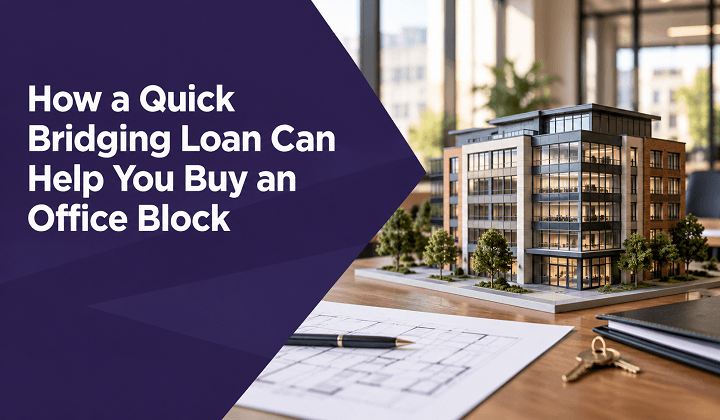
Buying an office block can present a valuable opportunity for commercial property investors, but securing the right property is only part of the challenge. The funding needs to be in place at the right time, particularly when a seller expects a fast completion, an auction deadline is approaching or a property needs work before a traditional mortgage lender will consider it.
For investors who cannot afford to wait for conventional finance, a bridging loan can provide a short-term funding solution. It can help you complete the purchase, take control of the property and work towards a longer-term financing arrangement or sale.
However, speed alone should not determine whether bridging finance is right for your purchase. You also need to understand the costs, the condition of the building, the rental prospects and how you intend to repay the loan.
When does buying an office block require fast finance?
Commercial property transactions do not always follow the timetable a buyer would prefer. A suitable office block might become available unexpectedly, or a seller may favour a buyer who can demonstrate that they are ready to proceed.
There are several situations where arranging finance quickly can make a significant difference.
Buying an office block at auction
Property auctions can offer opportunities to purchase commercial buildings at attractive prices, particularly where a property needs refurbishment or has been difficult to sell through conventional channels.
However, winning a property at auction normally creates a legally binding commitment to complete under the conditions of sale. Buyers commonly have to meet a completion deadline of 28 days, although the exact terms can vary.
Arranging a conventional commercial mortgage within that period can be difficult, especially if the building requires extensive checks or does not meet the lender’s standard criteria.
A bridging loan can provide the short-term funding needed to complete the purchase, provided the lender can approve and release the funds within the required timeframe.
Before bidding, check the legal pack, arrange an appropriate valuation and establish whether finance is available. You should also understand the consequences of failing to complete on time.
Securing a property before another buyer
A well-located office block with strong rental prospects may attract interest from several investors. If the seller wants a quick transaction, waiting for a lengthy mortgage application could put your purchase at risk.
Short-term finance can help eligible buyers act while longer-term funding is being arranged. This may be particularly useful where the buyer has identified a property with clear potential but needs more time to arrange permanent finance.
The important distinction is that a bridging loan should support a viable purchase, not encourage you to overlook problems with the property or pay more than the investment justifies.
Purchasing an office block that needs refurbishment
Some commercial buildings are difficult to finance through traditional lenders because they are vacant, require substantial repairs or need modernisation before they can attract tenants.
A bridging loan may allow an investor to acquire the building and carry out planned improvements before refinancing or selling it.
For example, an older office block might need new heating systems, upgraded facilities, improved energy efficiency or alterations to make the individual floors more attractive to businesses.
Where the investment involves significant construction or conversion work, it is worth assessing whether specialist development finance would be more appropriate than a straightforward bridging loan.
How does a bridging loan work when buying an office block?
A bridging loan is a short-term loan secured against property. It is designed to cover a temporary funding requirement, with repayment planned through an agreed exit strategy.
For an office block purchase, the process generally involves the following stages.
1. Establish the purchase requirements
Calculate the purchase price, available deposit or equity, transaction costs and any immediate expenditure required after completion. This will help establish how much funding you need and whether the investment is financially viable.
2. Assess the property and your proposed investment
The lender will consider the property being offered as security, its value, the amount requested and the proposed repayment strategy. Factors such as the building’s condition, occupancy, lease arrangements and location may influence the assessment.
3. Complete the necessary checks
Depending on the transaction, these may include a valuation, legal due diligence, title checks and an assessment of the property’s commercial use. The scope of these checks and the time required will depend on the individual case.
4. Complete the purchase
Once the loan has been approved, the necessary conditions have been satisfied and the legal work is complete, funds can be released to enable the transaction to proceed.
If you need a quick bridging loan, it is sensible to make contact as early as possible, explain the purchase deadline and provide the relevant property and financial information from the outset.
How quickly can you get a bridging loan for an office block?
Bridging finance can be arranged more quickly than many conventional commercial mortgages, but there is no universal completion timeframe.
Straightforward transactions with suitable security, clear documentation and an achievable exit strategy may progress quickly. More complicated purchases can take longer, particularly where there are title issues, unusual lease arrangements, structural concerns or questions about the building’s future use.
The main factors affecting the timescale include:
- Property valuation: The lender needs sufficient information to assess the security and determine an appropriate level of borrowing.
- Legal work: Title defects, complicated ownership structures and outstanding legal matters can delay completion.
- Property condition: Significant defects or refurbishment requirements may require further investigation.
- Loan structure: The amount requested, existing borrowing and proposed security arrangements can affect the assessment.
- Exit strategy: The lender needs to understand how the loan will be repaid and whether that plan is realistic.
If you are working towards an auction deadline or a contractual completion date, tell the lender at the beginning of the process. This allows the required work to be prioritised and helps identify potential obstacles before they become critical.
Never assume that finance will complete within a particular number of days until the lender has assessed the case and confirmed what is achievable.
What types of office block could qualify?
The suitability of an office block depends on the lender’s criteria and the circumstances of the proposed purchase. Bridging finance may be worth exploring for several types of commercial property.
Vacant office buildings
An empty office block can offer an opportunity to refurbish the premises, attract new tenants and improve the property’s income potential.
However, vacancy creates risks. You may need to cover insurance, security, maintenance, business rates where applicable and other holding costs while the property remains unoccupied.
Your financial calculations should account for a realistic period without rental income rather than assuming tenants will be found immediately.
Part-occupied office blocks
A building with existing tenants may provide rental income from completion, depending on the lease arrangements and how the transaction is structured.
Investors should examine the rent payable, lease expiry dates, tenant obligations, arrears and any upcoming break clauses. These details can affect both the property’s value and its future refinancing prospects.
Offices requiring modernisation
Buildings requiring improvements may be less attractive to conventional mortgage lenders, particularly where significant works are needed before the premises can be occupied or let.
Short-term finance may help an investor acquire the property while arranging the necessary improvements. The budget should include contingency funds for unexpected repairs, as commercial refurbishments can uncover issues that were not apparent during an initial inspection.
Office buildings with conversion potential
Some investors purchase office blocks with the intention of changing their use or redeveloping the site.
These projects require additional care. Planning permission, building regulations, fire safety requirements, access, energy performance and the feasibility of the proposed scheme can all influence whether the project succeeds.
Do not base your purchase price solely on the value you expect the building to achieve after conversion. Any projected increase in value should be supported by realistic costs, an achievable timetable and a clear understanding of the relevant planning requirements.
How much can you borrow against an office block?
The amount available depends on the lender’s criteria, the property’s assessed value, the proposed loan-to-value ratio and the overall strength of the transaction.
For example, a lender may be prepared to consider a lower loan-to-value ratio where a building is vacant, requires extensive work or has an uncertain income stream. A property with established tenants and a straightforward legal position may present a different risk profile.
You should also distinguish between the property’s purchase price and the amount a lender is willing to advance. A property being sold below its perceived market value does not automatically mean a lender will fund the full purchase price or the refurbishment costs.
When calculating your funding requirement, allow for:
- The purchase price and any required deposit.
- Legal fees and valuation costs.
- Arrangement fees and interest.
- Refurbishment and compliance work.
- Insurance and ongoing property expenses.
- A contingency for unexpected costs or delays.
The aim is to ensure that you have enough funding to complete the purchase and manage the property until the planned exit becomes achievable.
What does a bridging loan for an office block cost?
Bridging finance is generally more expensive than a conventional commercial mortgage when comparing the cost of borrowing over a similar period. Its value lies in providing short-term funding when speed or flexibility is important.
Before accepting an offer, establish the total cost of the facility rather than focusing exclusively on the advertised interest rate.
The main costs to examine include:
- Interest: Check the rate, how interest is calculated and whether it is paid monthly, retained from the advance or rolled up until repayment.
- Arrangement fees: Understand any fees charged for setting up the loan and when they become payable.
- Valuation and legal fees: You may need to cover the lender’s valuation and legal costs as well as your own solicitor’s fees.
- Exit costs: Check whether the agreement includes an exit fee, early repayment charge or other costs when the loan is repaid.
- Extension costs: If the property takes longer than expected to refinance or sell, extending the loan may create additional interest and fees, subject to the lender’s agreement.
A useful way to compare offers is to calculate the anticipated total cost over the expected loan term and consider what happens if the exit takes longer than planned.
How will you repay the bridging loan?
Your exit strategy is one of the most important parts of an office block purchase. Bridging finance is intended to be repaid, so you need a credible plan before committing to the loan.
There are three common approaches.
Refinancing onto a commercial mortgage
An investor may purchase an office block with bridging finance, improve the property or secure tenants, and then refinance onto a longer-term commercial mortgage.
The intention may be to move onto a facility with a longer repayment period and retain the property as an income-producing investment.
However, refinancing is not guaranteed. The future lender will carry out its own assessment of the property’s value, rental income, condition and the borrower’s circumstances. If the building does not meet the lender’s requirements, you may struggle to refinance on the expected terms.
Selling the office block
Some investors purchase a property that they intend to improve and sell at a profit.
This strategy depends on achieving a sale price that covers the original investment, refurbishment costs, finance costs, transaction expenses and the outstanding loan.
Allow for the possibility that the property takes longer to sell or achieves less than expected. An investment that only works if everything goes according to plan may leave you exposed.
Using other funds to repay the loan
In some cases, the borrower intends to repay the facility using funds released from another property or investment.
If this is your plan, make sure those funds are realistically available within the required timeframe. Avoid relying on an uncertain sale or an unconfirmed source of finance without considering an alternative.
For further guidance, read our article on exit strategies for commercial property developers.
How to prepare for a faster office block purchase
Preparation can make a significant difference when time is limited. Before approaching a lender, try to have the following information available:
- Property details: The address, purchase price, current condition, occupancy and any known issues.
- Transaction timetable: The expected exchange and completion dates, including any auction deadlines.
- Funding requirement: The amount needed, your available contribution and details of any existing borrowing secured against the property.
- Investment plan: Whether you intend to let, refurbish, convert or sell the building.
- Exit strategy: How you intend to repay the loan and the evidence supporting that plan.
- Supporting documents: Relevant property information, legal documentation, tenancy details and refurbishment estimates where applicable.
You do not need to have every detail resolved before making an initial enquiry. However, being clear about the transaction and providing accurate information can help identify whether the proposed funding is suitable.
If the office block needs extensive redevelopment rather than straightforward refurbishment, discuss the scope of work before deciding which type of finance to use.
Is a quick bridging loan right for your office block purchase?
A quick bridging loan can be useful when a commercial property opportunity requires funding faster than a conventional mortgage can provide it. It may help investors meet a completion deadline, acquire a vacant building or purchase premises that need work before longer-term finance becomes available.
The decision should still come down to the numbers. You need to understand the total borrowing costs, establish how much capital the project requires and ensure that the repayment plan remains realistic if the property takes longer to refinance or sell.
Bridging finance is not a substitute for proper due diligence. A fast purchase can become an expensive mistake if the building has serious defects, the rental market is weaker than expected or the proposed exit depends on assumptions that do not hold up.
If you are considering purchasing an office block and need short-term funding, BridgingLoansUK can discuss your requirements and assess whether a suitable solution may be available. Explain your deadline, the property you intend to purchase and your proposed exit strategy so that the relevant factors can be considered from the outset.Important: Bridging loans are secured against property. If you do not keep up with the terms of the loan, your property may be repossessed. BridgingLoansUK provides unregulated bridging loans only; these are not covered by the Financial Services Compensation Scheme or the Financial Ombudsman Service. Make sure you understand the terms and risks before proceeding.